Recipes · Greek · Gluten-Free Dishes
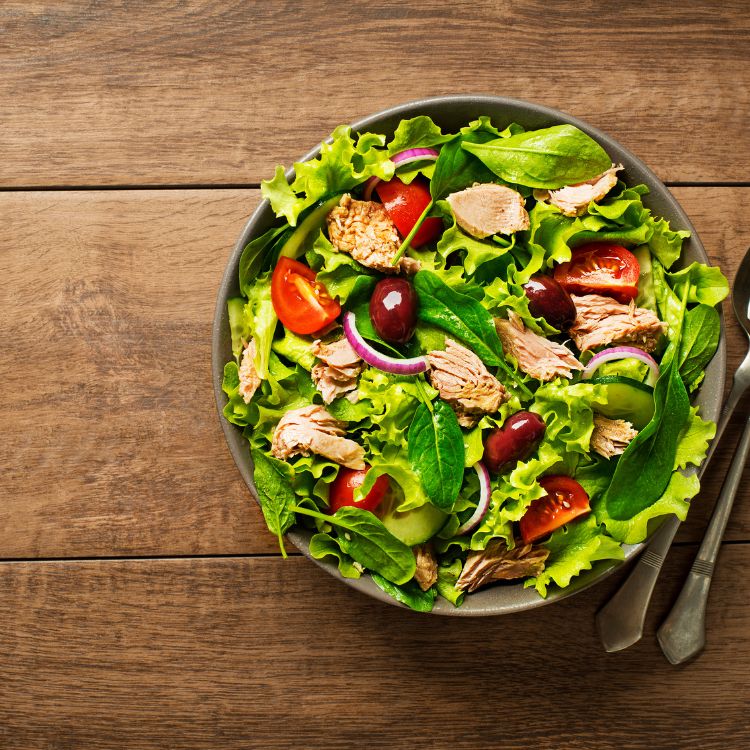
Tuna Spinach Salad with Olive Oil Dressing
One serving has 239 kcal and 28 g protein, and at least a fifth of a woman's daily need of vitamin K (329%), selenium (147%), cobalamin (125%), niacin (100%), vitamin C (44%) and pyridoxine (40%). Ready in 10 minutes.
- Preparation: 10 min
- Makes: 1 serving (249 g)
- Difficulty: Easy
- Diets: Dairy-free, Gluten-free, Pescatarian, Low carb, Halal, Kosher
- Contains: fish
Ingredients
- 100 g Fish, tuna, light, canned in water, without salt, drained solids
- 60 g Spinach, raw
- 10 g Olives, black
- 5 g Lemon juice, raw
- 1 g Spices, pepper, black
- 15 g Onions, raw
- 50 g Tomatoes, grape, raw
- 8 g Olive oil
Method
- Drain the canned tuna thoroughly to remove excess water or oil. If using tuna in olive oil, reduce the amount of dressing to avoid making the salad too oily.
- In a salad bowl, lay down the fresh spinach leaves as the base. Spread the drained tuna over the spinach evenly. Add the sliced olives, scattering them over the salad.
- Drizzle olive oil evenly over the salad. If desired, add a squeeze of fresh lemon juice and a sprinkle of black pepper for an added layer of flavor.
- For extra texture and taste, add thinly sliced red onions, halved cherry tomatoes, or crumbled feta cheese on top of the salad.
- Gently toss the salad to ensure the dressing coats all the ingredients evenly. Serve immediately. Chef's Tips Tuna Choices: Canned tuna in water is leaner, while tuna in olive oil adds richness. Adjust the dressing amount based on the type of tuna used. Flavor Boost: Fresh lemon juice brightens the dish, while feta cheese adds a creamy, tangy element. Fresh Spinach: Always use fresh spinach leaves for a crisp, refreshing texture that pairs well with tuna.
Nutrition per serving
| Nutrient | Per serving | Share of a day's need |
|---|---|---|
| Energy | 239 kcal | 11% |
| Carbohydrates | 7.2 g | |
| Water | 203 mL | |
| Fiber | 2.7 g | 9% |
| Protein | 28 g | 58% |
| Tryptophan | 0.29 g | |
| Threonine | 1.1 g | |
| Isoleucine | 1.2 g | |
| Leucine | 2.1 g | |
| Lysine | 2.4 g | |
| Methionine | 0.76 g | |
| Cystine | 0.27 g | |
| Phenylalanine | 1 g | |
| Tyrosine | 0.87 g | |
| Valine | 1.3 g | |
| Histidine | 0.75 g | |
| Fat | 10.7 g | |
| Monounsaturated | 6.4 g | |
| Polyunsaturated | 1.3 g | |
| Docosahexaenoic Acid (DHA) | 0.22 g | |
| Eicosapentaenoic Acid (EPA) | 0.05 g | |
| Omega-6 | 0.8 g | |
| Saturated | 1.8 g | |
| Trans-Fats | 0 g | |
| Cholesterol | 30 mg | |
| Calcium | 74.4 mg | 7% |
| Copper | 0.17 mg | 19% |
| Iron | 3.3 mg | 18% |
| Magnesium | 92.7 mg | 30% |
| Manganese | 0.22 mg | 12% |
| Phosphorus | 207 mg | 30% |
| Potassium | 757 mg | 16% |
| Selenium | 80.6 µg | 147% |
| Sodium | 194 mg | |
| Zinc | 1.2 mg | 15% |
| Thiamin (vitamin B1) | 0.13 mg | 12% |
| Riboflavin (vitamin B2) | 0.23 mg | 21% |
| Niacin (vitamin B3) | 14.1 mg | 100% |
| Pantothenic acid (vitamin B5) | 0.25 mg | 5% |
| Pyridoxine (vitamin B6) | 0.52 mg | 40% |
| Folate (vitamin B9) | 82.6 µg | 21% |
| Cobalamin (vitamin B12) | 3 µg | 125% |
| Choline | 18.8 mg | 4% |
| Vitamin A | 172 µg | 25% |
| Vitamin C | 32.6 mg | 44% |
| Vitamin D (D2 + D3) | 0 IU | 0% |
| Vitamin E | 3.6 mg | 24% |
| Vitamin K | 296 µg | 329% |
Shares of a day's need are for a woman of 30, 165 cm, 60 kg, lightly active, by the US and Canadian Dietary Reference Intakes. SustainBite works out each person's own needs, by the standard where they live: the Nordic Nutrition Recommendations in Norway, the UK's, EFSA's in the EU.
Climate footprint
0.7 kg CO2e a serving: about average for main dishes on SustainBite. Source: ADEME, Agribalyse 3.2.
Plan weeks of recipes like this on SustainBite: meals that meet each person's vitamin and mineral needs, for a family too, with one grocery list. Free.