Recipes · Greek · Gluten-Free Dishes
Grilled Salmon & Asparagus
One serving has 381 kcal and 33 g protein, and at least a fifth of a woman's daily need of cobalamin (199%), vitamin K (144%), pyridoxine (107%), selenium (105%), niacin (92%) and copper (67%). Ready in 20 minutes.
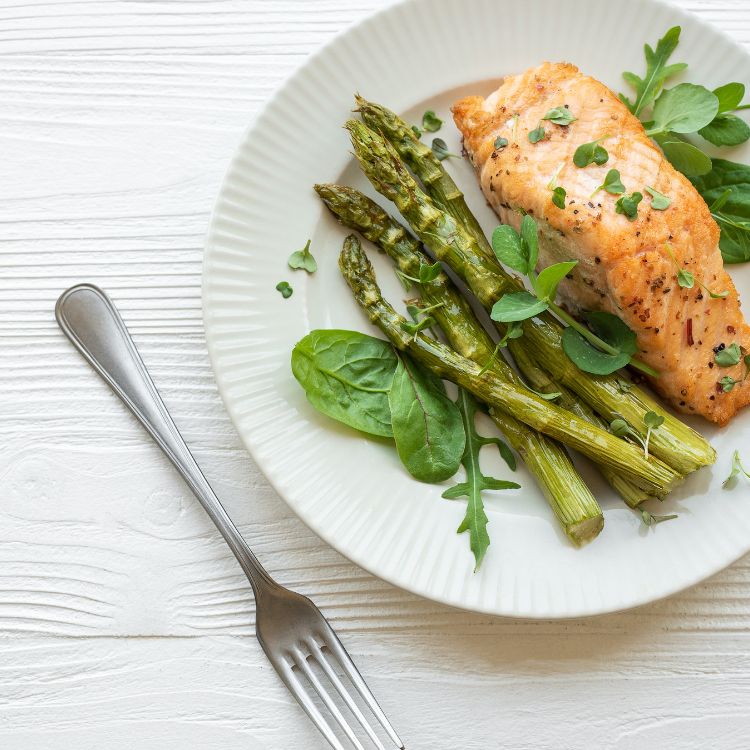
- Preparation: 10 min
- Cooking: 10 min
- Makes: 1 serving (282 g)
- Difficulty: Easy
- Diets: Gluten-free, Low carb, Pescatarian, Dairy-free, Halal, Kosher
- Contains: fish
Ingredients
- 150 g Fish, salmon, Atlantic, wild, raw
- 5 g Lemon juice, raw
- 1 g Salt, table
- 1 g Spices, pepper, black
- 100 g Asparagus, raw
- 15 g Olive oil
- 5 g Garlic, raw
- 5 g Parsley, fresh
Method
- Marinate the salmon fillet with half of the lemon juice, a pinch of salt, and black pepper. Let it sit for about 10 minutes to absorb the flavors.
- Trim the tough ends of the asparagus. Drizzle with half of the olive oil and toss to coat evenly. If desired, mix minced garlic into the oil for added flavor.
- Preheat the grill to medium-high heat. Lightly oil the grates to prevent sticking. Place the salmon fillet, skin-side down, on the grill. Cook for 4-5 minutes on each side, or until the salmon flakes easily with a fork. Grill the asparagus for 3-4 minutes, turning occasionally, until tender and slightly charred.
- Plate the grilled salmon and asparagus. Drizzle the remaining olive oil over the salmon and squeeze the rest of the lemon juice on top. Garnish with fresh dill or parsley for a finishing touch.
- Chef's Tips Crispy Skin: Ensure the grill is well-oiled and hot before placing the salmon to achieve a crispy skin. Flavor Boost: Enhance the olive oil dressing with minced garlic or fresh herbs like dill or parsley. Perfect Doneness: Salmon is best when slightly pink in the center. Adjust cooking time based on the fillet's thickness and your preference.
Nutrition per serving
| Nutrient | Per serving | Share of a day's need |
|---|---|---|
| Energy | 381 kcal | 18% |
| Carbohydrates | 6.6 g | |
| Water | 208 mL | |
| Fiber | 2.7 g | 9% |
| Protein | 32.6 g | 68% |
| Tryptophan | 0.36 g | |
| Threonine | 1.4 g | |
| Isoleucine | 1.5 g | |
| Leucine | 2.6 g | |
| Lysine | 2.9 g | |
| Methionine | 0.91 g | |
| Cystine | 0.35 g | |
| Phenylalanine | 1.3 g | |
| Tyrosine | 1.1 g | |
| Valine | 1.7 g | |
| Histidine | 0.93 g | |
| Fat | 24.7 g | |
| Monounsaturated | 13.4 g | |
| Polyunsaturated | 5.3 g | |
| Docosahexaenoic Acid (DHA) | 1.7 g | |
| Eicosapentaenoic Acid (EPA) | 0.48 g | |
| Omega-6 | 1.6 g | |
| Saturated | 3.9 g | |
| Trans-Fats | 0 g | |
| Cholesterol | 82.5 mg | |
| Calcium | 63.1 mg | 6% |
| Copper | 0.6 mg | 67% |
| Iron | 3.9 mg | 22% |
| Magnesium | 63.3 mg | 20% |
| Manganese | 0.32 mg | 18% |
| Phosphorus | 365 mg | 52% |
| Potassium | 1,003 mg | 21% |
| Selenium | 57.6 µg | 105% |
| Sodium | 460 mg | |
| Zinc | 1.6 mg | 20% |
| Thiamin (vitamin B1) | 0.5 mg | 45% |
| Riboflavin (vitamin B2) | 0.72 mg | 65% |
| Niacin (vitamin B3) | 12.9 mg | 92% |
| Pantothenic acid (vitamin B5) | 2.8 mg | 56% |
| Pyridoxine (vitamin B6) | 1.4 mg | 107% |
| Folate (vitamin B9) | 98.4 µg | 25% |
| Cobalamin (vitamin B12) | 4.8 µg | 199% |
| Choline | 18.2 mg | 4% |
| Vitamin A | 77.3 µg | 11% |
| Vitamin C | 14.7 mg | 20% |
| Vitamin D (D2 + D3) | 0 IU | 0% |
| Vitamin E | 4.3 mg | 29% |
| Vitamin K | 129 µg | 144% |
Shares of a day's need are for a woman of 30, 165 cm, 60 kg, lightly active, by the US and Canadian Dietary Reference Intakes. SustainBite works out each person's own needs, by the standard where they live: the Nordic Nutrition Recommendations in Norway, the UK's, EFSA's in the EU.
Climate footprint
1 kg CO2e a serving: about average for main dishes on SustainBite. Source: ADEME, Agribalyse 3.2.
Plan weeks of recipes like this on SustainBite: meals that meet each person's vitamin and mineral needs, for a family too, with one grocery list. Free.