Recipes · German · Main Courses
Leberkäse
One serving has 374 kcal and 29 g protein, and at least a fifth of a woman's daily need of cobalamin (92%), selenium (80%), zinc (60%), phosphorus (47%), choline (47%) and thiamin (45%). Ready in 80 minutes.
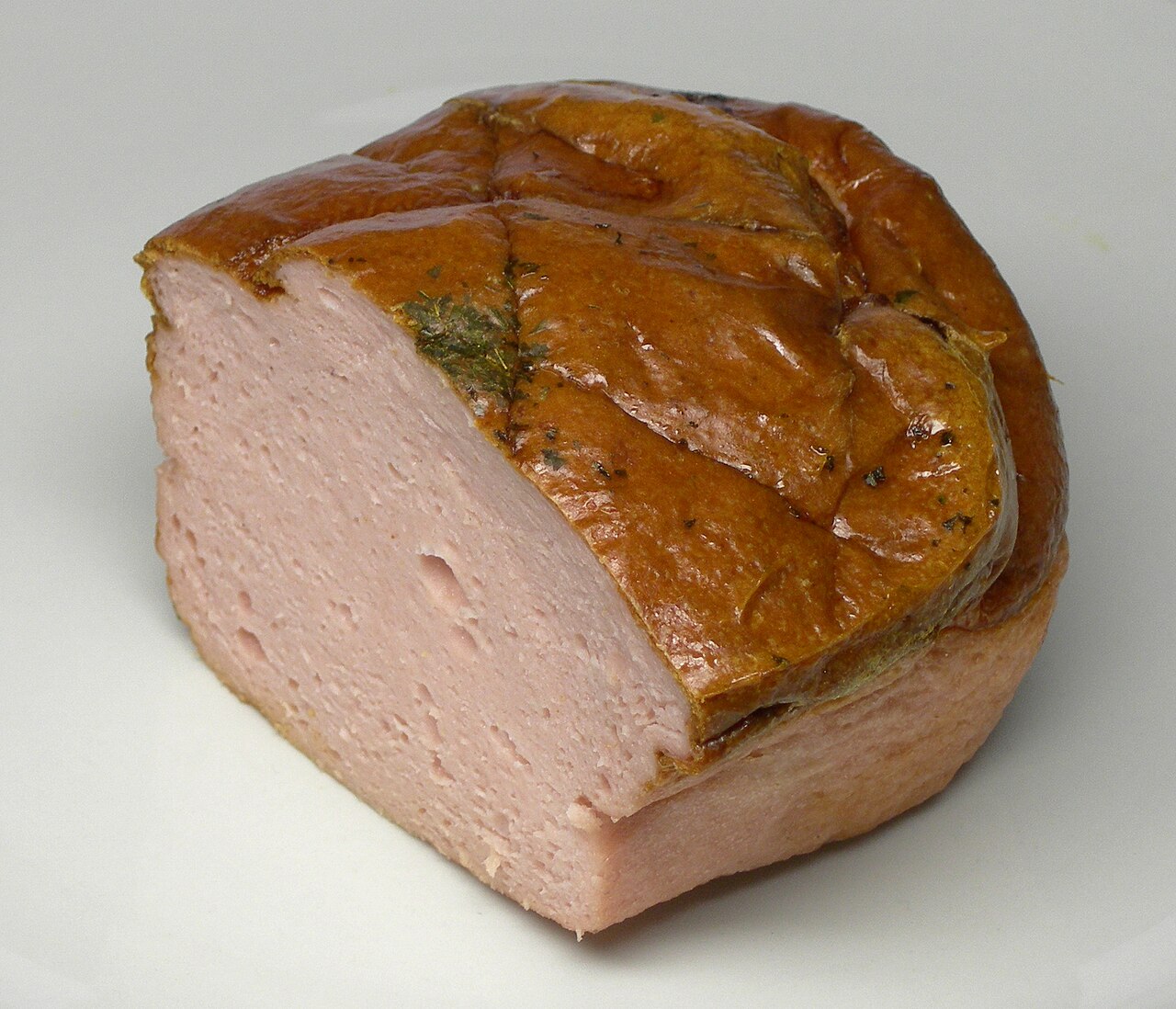

- Preparation: 20 min
- Cooking: 60 min
- Makes: 1 serving (200 g)
- Difficulty: Medium
- Diets: Gluten-free, Dairy-free, Low carb
- Contains: beef, egg, mustard, pork
Ingredients
- 60 g Beef, ground, 85% lean, raw
- 60 g Pork, ground, raw
- 15 g Water
- 0.5 g Onion powder
- 0.2 g Marjoram, dried
- 0.1 g Nutmeg
- 1 g Salt
- 0.2 g Black pepper
- 55 g Eggs, whole, raw
- 8 g Mustard
Method
- Makes 1 portion (one thick slice); multiply the ingredients by 8 for a whole loaf, as Leberkäse needs to be baked as one loaf and sliced afterwards. Blend the ground beef and pork in a food processor with the ice-cold water, onion powder, marjoram, nutmeg, salt and pepper until very smooth and pasty; this fine emulsion is what gives Leberkäse its dense texture.
- Press the mixture firmly into a small greased loaf tin, smoothing the top.
- Bake at 180 °C (355 °F) for about 1 hour, until the top is deep golden-brown and a skewer comes out with clear, not pink, juices (internal temperature at least 74 °C/165 °F).
- Let cool slightly, then turn out and cut a thick slice.
- Fry the slice in a dry pan over medium heat for 2-3 minutes per side until crisp and hot through.
- Fry the egg in the same pan until the white is set (cook the yolk through too if serving pregnant women, young children or the elderly).
- Serve the fried Leberkäse slice topped with the egg, with the mustard on the side.
Nutrition per serving
| Nutrient | Per serving | Share of a day's need |
|---|---|---|
| Energy | 374 kcal | 18% |
| Carbohydrates | 1.6 g | |
| Water | 140 mL | |
| Fiber | 0.55 g | 2% |
| Protein | 28.6 g | 60% |
| Tryptophan | 0.28 g | |
| Threonine | 1.2 g | |
| Isoleucine | 1.4 g | |
| Leucine | 2.3 g | |
| Lysine | 2.4 g | |
| Methionine | 0.77 g | |
| Cystine | 0.4 g | |
| Phenylalanine | 1.2 g | |
| Tyrosine | 0.98 g | |
| Valine | 1.6 g | |
| Histidine | 0.95 g | |
| Fat | 27.3 g | |
| Monounsaturated | 11.7 g | |
| Polyunsaturated | 2.5 g | |
| Docosahexaenoic Acid (DHA) | 0.03 g | |
| Eicosapentaenoic Acid (EPA) | 0 g | |
| Omega-6 | 2.1 g | |
| Saturated | 9.9 g | |
| Trans-Fats | 0.54 g | |
| Cholesterol | 289 mg | |
| Calcium | 60.9 mg | 6% |
| Copper | 0.12 mg | 13% |
| Iron | 3.1 mg | 17% |
| Magnesium | 34.6 mg | 11% |
| Manganese | 0.11 mg | 6% |
| Phosphorus | 328 mg | 47% |
| Potassium | 448 mg | 10% |
| Selenium | 43.9 µg | 80% |
| Sodium | 628 mg | |
| Zinc | 4.8 mg | 60% |
| Thiamin (vitamin B1) | 0.5 mg | 45% |
| Riboflavin (vitamin B2) | 0.49 mg | 45% |
| Niacin (vitamin B3) | 5.5 mg | 39% |
| Pantothenic acid (vitamin B5) | 1.6 mg | 32% |
| Pyridoxine (vitamin B6) | 0.54 mg | 42% |
| Folate (vitamin B9) | 34 µg | 8% |
| Cobalamin (vitamin B12) | 2.2 µg | 92% |
| Choline | 200 mg | 47% |
| Vitamin A | 92.9 µg | 13% |
| Vitamin C | 0.67 mg | 1% |
| Vitamin D (D2 + D3) | 46.9 IU | 8% |
| Vitamin E | 0.72 mg | 5% |
| Vitamin K | 2.6 µg | 3% |
Shares of a day's need are for a woman of 30, 165 cm, 60 kg, lightly active, by the US and Canadian Dietary Reference Intakes. SustainBite works out each person's own needs, by the standard where they live: the Nordic Nutrition Recommendations in Norway, the UK's, EFSA's in the EU.
Climate footprint
2.7 kg CO2e a serving: higher than most main dishes on SustainBite. Source: ADEME, Agribalyse 3.2.
Plan weeks of recipes like this on SustainBite: meals that meet each person's vitamin and mineral needs, for a family too, with one grocery list. Free.