Recipes · Indian · Main Courses
Pav Bhaji
One serving has 557 kcal and 16 g protein, and at least a fifth of a woman's daily need of vitamin C (144%), manganese (93%), vitamin A (74%), pyridoxine (69%), vitamin K (64%) and thiamin (61%). Ready in 45 minutes.
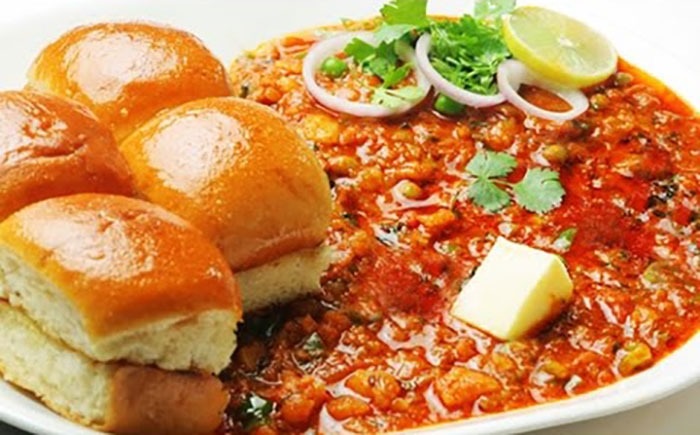

- Preparation: 15 min
- Cooking: 30 min
- Makes: 1 serving (588 g)
- Difficulty: Medium
- Diets: Vegetarian
- Contains: dairy, gluten
Ingredients
- 120 g Potatoes, raw
- 40 g Cauliflower, raw
- 40 g Peas, green, frozen
- 30 g Carrots, raw
- 30 g Bell pepper, green, raw
- 60 g Onions, raw
- 100 g Tomatoes, raw
- 4 g Ginger, fresh
- 4 g Garlic, raw
- 4 g Chili peppers, green, raw
- 20 g Butter, unsalted
- 4 g Curry powder
- 2 g Chili powder
- 1 g Turmeric
- 1.3 g Salt
- 5 g Lemon juice
- 3 g Cilantro, fresh
- 60 g Water
- 60 g Bread rolls, soft
Method
- Boil the potatoes, cauliflower, carrots and peas together in the water until completely soft, about 15 minutes, then mash roughly right in the pot.
- Melt half the butter in a wide pan and fry half the onion with the ginger, garlic and green chili until soft, then add the bell pepper and cook 3 minutes.
- Add the tomatoes, turmeric, chili powder and pav bhaji spice blend, and cook, mashing well, until thick and jammy, about 8 minutes.
- Stir in the mashed vegetables and simmer 8-10 minutes, mashing further and adding a splash of water if needed, until smooth-ish; season with salt and lemon juice.
- Split the pav rolls, toast on a griddle with the remaining butter until golden, and serve alongside the bhaji topped with the remaining raw onion and cilantro.
Nutrition per serving
| Nutrient | Per serving | Share of a day's need |
|---|---|---|
| Energy | 557 kcal | 26% |
| Carbohydrates | 80.2 g | |
| Water | 464 mL | |
| Fiber | 13.3 g | 45% |
| Protein | 15.5 g | 32% |
| Tryptophan | 0.13 g | |
| Threonine | 0.51 g | |
| Isoleucine | 0.5 g | |
| Leucine | 0.9 g | |
| Lysine | 0.64 g | |
| Methionine | 0.2 g | |
| Cystine | 0.24 g | |
| Phenylalanine | 0.65 g | |
| Tyrosine | 0.37 g | |
| Valine | 0.64 g | |
| Histidine | 0.3 g | |
| Fat | 21.8 g | |
| Monounsaturated | 6.3 g | |
| Polyunsaturated | 2.7 g | |
| Docosahexaenoic Acid (DHA) | 0 g | |
| Eicosapentaenoic Acid (EPA) | 0 g | |
| Omega-6 | 2.3 g | |
| Saturated | 11.3 g | |
| Trans-Fats | 0 g | |
| Cholesterol | 45.4 mg | |
| Calcium | 223 mg | 22% |
| Copper | 0.52 mg | 58% |
| Iron | 6.4 mg | 36% |
| Magnesium | 104 mg | 34% |
| Manganese | 1.7 mg | 93% |
| Phosphorus | 290 mg | 41% |
| Potassium | 1,426 mg | 30% |
| Selenium | 20.8 µg | 38% |
| Sodium | 943 mg | |
| Zinc | 2.2 mg | 28% |
| Thiamin (vitamin B1) | 0.67 mg | 61% |
| Riboflavin (vitamin B2) | 0.44 mg | 40% |
| Niacin (vitamin B3) | 7 mg | 50% |
| Pantothenic acid (vitamin B5) | 1.5 mg | 31% |
| Pyridoxine (vitamin B6) | 0.9 mg | 69% |
| Folate (vitamin B9) | 166 µg | 41% |
| Cobalamin (vitamin B12) | 0.11 µg | 5% |
| Choline | 77.8 mg | 18% |
| Vitamin A | 519 µg | 74% |
| Vitamin C | 108 mg | 144% |
| Vitamin D (D2 + D3) | 0 IU | 0% |
| Vitamin E | 3.5 mg | 23% |
| Vitamin K | 58 µg | 64% |
Shares of a day's need are for a woman of 30, 165 cm, 60 kg, lightly active, by the US and Canadian Dietary Reference Intakes. SustainBite works out each person's own needs, by the standard where they live: the Nordic Nutrition Recommendations in Norway, the UK's, EFSA's in the EU.
Climate footprint
0.6 kg CO2e a serving: lower than most main dishes on SustainBite. Source: ADEME, Agribalyse 3.2.
Plan weeks of recipes like this on SustainBite: meals that meet each person's vitamin and mineral needs, for a family too, with one grocery list. Free.