Recipes · Russian · Bread
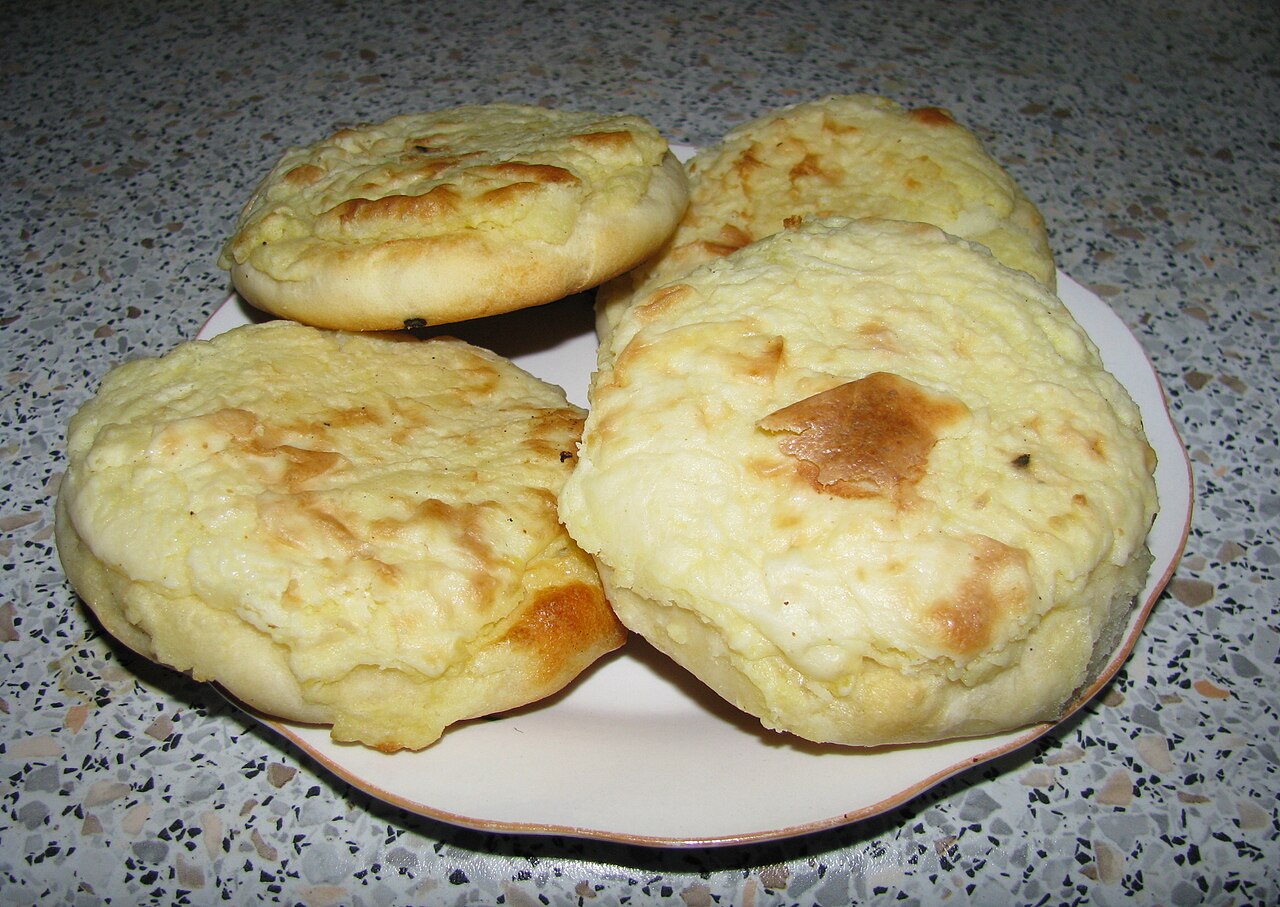
Shangi (Russian Northern Potato-Topped Buns)
One serving has 342 kcal and 8 g protein, and at least a fifth of a woman's daily need of thiamin (45%), riboflavin (34%), selenium (33%), folate (28%), niacin (25%) and manganese (21%). Ready in 140 minutes.

- Preparation: 95 min
- Cooking: 45 min
- Makes: 1 serving (168 g)
- Difficulty: Medium
- Diets: Vegetarian
- Contains: dairy, egg, gluten
Ingredients
- 33 g Milk, whole
- 1 g Yeast, active dry
- 3 g Sugar
- 40 g Flour, all-purpose
- 8 g Eggs, whole, raw
- 0.3 g Salt
- 11 g Butter, unsalted
- 60 g Potatoes, floury, raw
- 12 g Sour cream
Method
- Warm most of the milk until lukewarm, keeping a splash for the potato, stir in the yeast and sugar and leave for 10 minutes until foamy.
- Add the flour, half the egg, most of the salt and a third of the butter, melted, and knead for 8 minutes into a soft, smooth dough; cover and leave to rise for 1 hour, until doubled.
- Meanwhile, boil the peeled potato for 20 minutes until soft, drain and mash it with the milk you kept, a third of the butter and the rest of the salt, then beat in the rest of the egg.
- Shape the dough into a ball and press or roll it into a round 10-12 cm across, a little thicker at the rim, and set it on a lined tray.
- Spread the mashed potato over the round, leaving the rim bare, brush it with the sour cream and leave to rise for 15 minutes.
- Bake at 200°C for 20-25 minutes, until the dough is golden and the topping has brown patches.
- Brush the hot shangi with the rest of the butter, melted, cover with a cloth for 10 minutes to soften, and serve warm with milk or tea; shangi come from the Russian North, the Urals and Siberia.
Nutrition per serving
| Nutrient | Per serving | Share of a day's need |
|---|---|---|
| Energy | 342 kcal | 16% |
| Carbohydrates | 47 g | |
| Water | 97.7 mL | |
| Fiber | 2.1 g | 7% |
| Protein | 8.3 g | 17% |
| Tryptophan | 0.09 g | |
| Threonine | 0.24 g | |
| Isoleucine | 0.29 g | |
| Leucine | 0.55 g | |
| Lysine | 0.32 g | |
| Methionine | 0.15 g | |
| Cystine | 0.12 g | |
| Phenylalanine | 0.36 g | |
| Tyrosine | 0.25 g | |
| Valine | 0.36 g | |
| Histidine | 0.17 g | |
| Fat | 13.6 g | |
| Monounsaturated | 3.8 g | |
| Polyunsaturated | 0.84 g | |
| Docosahexaenoic Acid (DHA) | 0 g | |
| Eicosapentaenoic Acid (EPA) | 0 g | |
| Omega-6 | 0.62 g | |
| Saturated | 7.7 g | |
| Trans-Fats | 0.1 g | |
| Cholesterol | 63.8 mg | |
| Calcium | 70.7 mg | 7% |
| Copper | 0.14 mg | 16% |
| Iron | 2.6 mg | 14% |
| Magnesium | 28.8 mg | 9% |
| Manganese | 0.38 mg | 21% |
| Phosphorus | 138 mg | 20% |
| Potassium | 375 mg | 8% |
| Selenium | 18.1 µg | 33% |
| Sodium | 151 mg | |
| Zinc | 0.81 mg | 10% |
| Thiamin (vitamin B1) | 0.49 mg | 45% |
| Riboflavin (vitamin B2) | 0.37 mg | 34% |
| Niacin (vitamin B3) | 3.4 mg | 25% |
| Pantothenic acid (vitamin B5) | 0.81 mg | 16% |
| Pyridoxine (vitamin B6) | 0.27 mg | 21% |
| Folate (vitamin B9) | 111 µg | 28% |
| Cobalamin (vitamin B12) | 0.26 µg | 11% |
| Choline | 40.5 mg | 10% |
| Vitamin A | 118 µg | 17% |
| Vitamin C | 3.5 mg | 5% |
| Vitamin D (D2 + D3) | 23.4 IU | 4% |
| Vitamin E | 0.51 mg | 3% |
| Vitamin K | 2.3 µg | 3% |
Shares of a day's need are for a woman of 30, 165 cm, 60 kg, lightly active, by the US and Canadian Dietary Reference Intakes. SustainBite works out each person's own needs, by the standard where they live: the Nordic Nutrition Recommendations in Norway, the UK's, EFSA's in the EU.
Climate footprint
0.3 kg CO2e a serving: about average for breakfasts, sides, desserts and drinks on SustainBite. Source: ADEME, Agribalyse 3.2.
Plan weeks of recipes like this on SustainBite: meals that meet each person's vitamin and mineral needs, for a family too, with one grocery list. Free.