Recipes · Nigerian · Main Courses
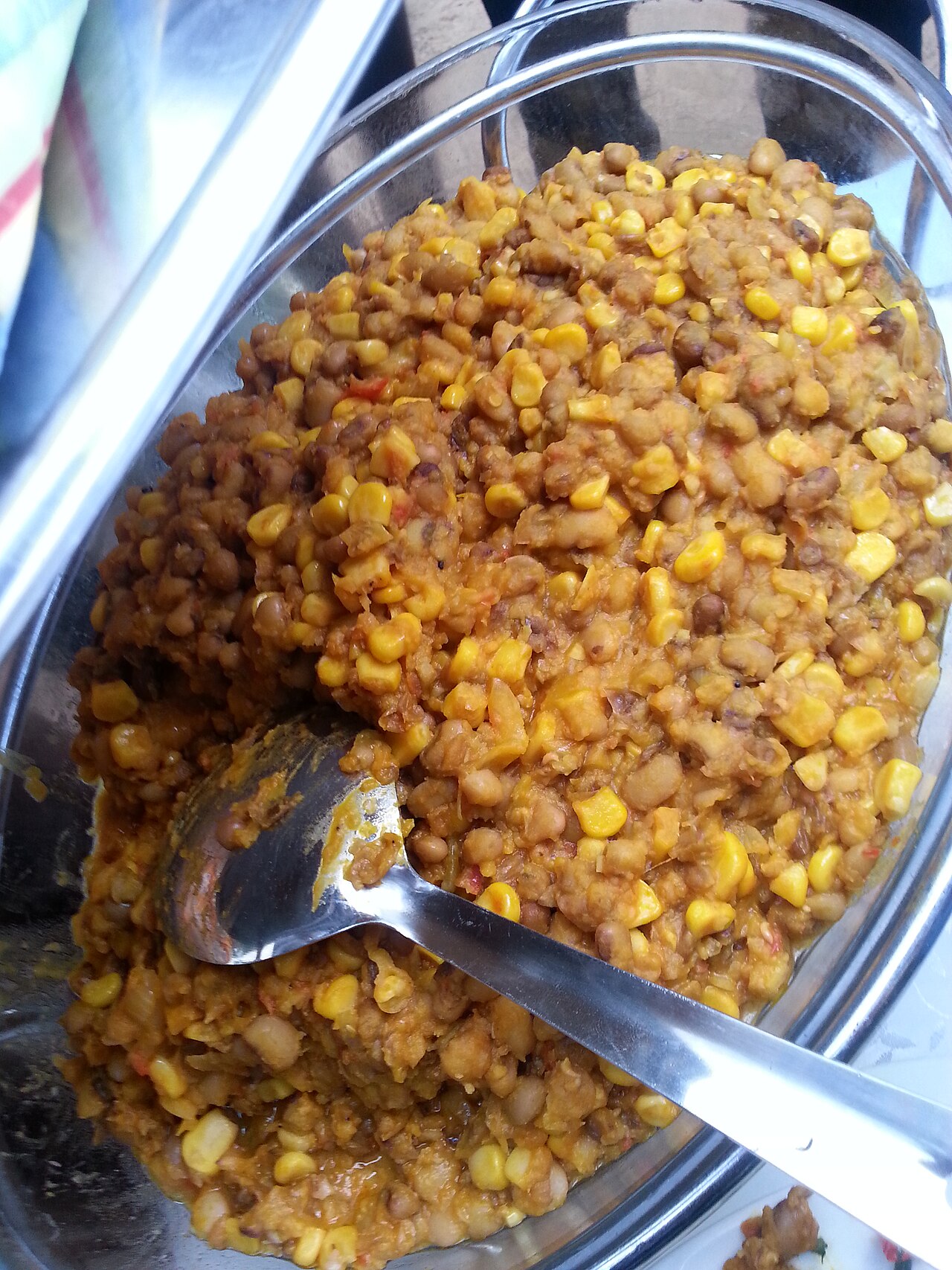
Adalu (Nigerian Beans and Sweetcorn Pottage)
One serving has 517 kcal and 22 g protein, and at least a fifth of a woman's daily need of folate (132%), vitamin C (101%), copper (86%), manganese (80%), thiamin (79%) and phosphorus (64%). Ready in 105 minutes.

- Preparation: 15 min
- Cooking: 90 min
- Makes: 1 serving (899 g)
- Difficulty: Easy
- Diets: Vegan, Dairy-free, Gluten-free
- Contains: celery
Ingredients
- 70 g Brown (oloyin) or black-eyed beans, dried
- 450 g Water (for cooking the beans)
- 50 g Onion, chopped
- 40 g Tatashe (red bell pepper)
- 50 g Tomato
- 3 g Scotch bonnet (ata rodo)
- 15 g Red palm oil
- 120 g Sweetcorn kernels (fresh or frozen)
- 100 g Vegetable stock
- 0.8 g Salt
Method
- Pick over the beans for stones and rinse them. Cover with water, bring to the boil for 5 minutes, then drain: this first boil makes them easier to digest. Put them back with the 450 ml of fresh water and simmer, partly covered, for 50-60 minutes until soft enough to crush between your fingers. Top up with hot water as they cook.
- Meanwhile blend the tatashe, tomato, scotch bonnet and half the onion to a coarse purée.
- Heat the palm oil in a pan over medium heat (don't let it smoke) and fry the rest of the onion for 3 minutes. Add the pepper purée and fry for 10 minutes, stirring, until it thickens and the oil rises to the top.
- Add the pepper sauce, the corn, the stock and the salt to the beans and stir well. Simmer for 15-20 minutes, stirring often so it doesn't catch, until the beans start to break down and the pottage is thick and orange.
- Mash some of the beans against the side of the pot with a spoon to make it creamier, and serve hot in a bowl. In south-western Nigeria adalu is a one-pot meal often eaten with fried plantain (dodo); most cooks add ground crayfish, left out here to keep it vegan.
Nutrition per serving
| Nutrient | Per serving | Share of a day's need |
|---|---|---|
| Energy | 517 kcal | 24% |
| Carbohydrates | 74.7 g | |
| Water | 779 mL | |
| Fiber | 12.2 g | 41% |
| Protein | 22.1 g | 46% |
| Tryptophan | 0.25 g | |
| Threonine | 0.82 g | |
| Isoleucine | 0.85 g | |
| Leucine | 1.7 g | |
| Lysine | 1.3 g | |
| Methionine | 0.32 g | |
| Cystine | 0.23 g | |
| Phenylalanine | 1.2 g | |
| Tyrosine | 0.7 g | |
| Valine | 1 g | |
| Histidine | 0.64 g | |
| Fat | 17.9 g | |
| Monounsaturated | 6.2 g | |
| Polyunsaturated | 2.5 g | |
| Docosahexaenoic Acid (DHA) | 0 g | |
| Eicosapentaenoic Acid (EPA) | 0 g | |
| Omega-6 | 2.3 g | |
| Saturated | 8.1 g | |
| Trans-Fats | 0 g | |
| Cholesterol | 0 mg | |
| Calcium | 116 mg | 12% |
| Copper | 0.77 mg | 86% |
| Iron | 6.9 mg | 38% |
| Magnesium | 195 mg | 63% |
| Manganese | 1.4 mg | 80% |
| Phosphorus | 445 mg | 64% |
| Potassium | 1,407 mg | 30% |
| Selenium | 7.3 µg | 13% |
| Sodium | 660 mg | |
| Zinc | 3.3 mg | 41% |
| Thiamin (vitamin B1) | 0.87 mg | 79% |
| Riboflavin (vitamin B2) | 0.31 mg | 28% |
| Niacin (vitamin B3) | 4.5 mg | 32% |
| Pantothenic acid (vitamin B5) | 2.2 mg | 44% |
| Pyridoxine (vitamin B6) | 0.6 mg | 46% |
| Folate (vitamin B9) | 530 µg | 132% |
| Cobalamin (vitamin B12) | 0 µg | 0% |
| Choline | 103 mg | 24% |
| Vitamin A | 110 µg | 16% |
| Vitamin C | 75.5 mg | 101% |
| Vitamin D (D2 + D3) | 0 IU | 0% |
| Vitamin E | 3.7 mg | 25% |
| Vitamin K | 12.3 µg | 14% |
Shares of a day's need are for a woman of 30, 165 cm, 60 kg, lightly active, by the US and Canadian Dietary Reference Intakes. SustainBite works out each person's own needs, by the standard where they live: the Nordic Nutrition Recommendations in Norway, the UK's, EFSA's in the EU.
Climate footprint
0.3 kg CO2e a serving: lower than most main dishes on SustainBite. Source: ADEME, Agribalyse 3.2.
Plan weeks of recipes like this on SustainBite: meals that meet each person's vitamin and mineral needs, for a family too, with one grocery list. Free.